Title Deeds in Thailand for Foreigners: A Complete Guide

Thailand’s land ownership system can be confusing—especially for foreigners. While the types of title deeds are the same for Thai nationals and foreigners, the legal rights attached to them differ significantly.
Subscription Form

Are You Looking for Legal Expertise?

Stay in control. Your property, your rules, while we handle the hard work, making renting simple, efficient, and stress-free from start to finish.

Understanding Land Ownership in Thailand

Thailand operates under a Torrens title system, meaning land ownership is determined by registration at the Land Office. The stronger and more precise the title deed, the more legally secure the ownership.
For foreigners, the most important rule is: You generally cannot own land freehold in Thailand in your own name.
However, you can still legally control or benefit from land through:
  • Long-term leases

  • Condominium ownership

  • Legal rights such as usufruct or superficies

Because of this, choosing the right title deed becomes critical.

Chanote (Nor Sor 4 Jor): The Gold Standard
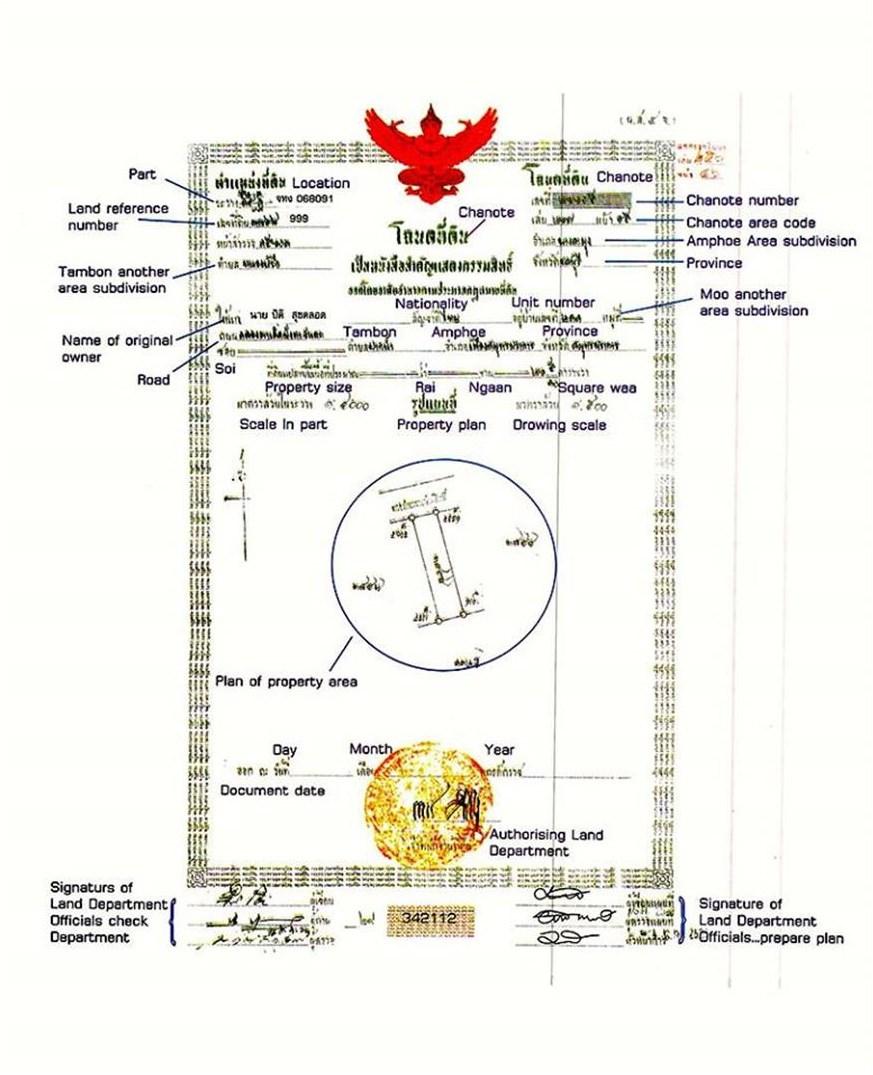
The Chanote title deed is the highest and most secure form of land ownership in Thailand.
Key Features:
  • Fully surveyed using GPS coordinates

  • Exact boundaries marked by official posts

  • Registered and verified by DLT

  • Public record with clear ownership history

Legal Rights:
  • Can be sold, transferred, or inherited

  • Can be leased (up to 30 years per contract)

  • Can be mortgaged and developed freely

For Foreigners:
Although foreigners cannot directly own Chanote land, this title is still the safest and most preferred option because:
  • Lease agreements are enforceable

  • Protected through legal rights

  • It allows clean and secure transactions

Nearly all reputable real estate transactions involving foreigners are based on Chanote land.

Nor Sor 3 Gor (NS3K): A Strong Alternative
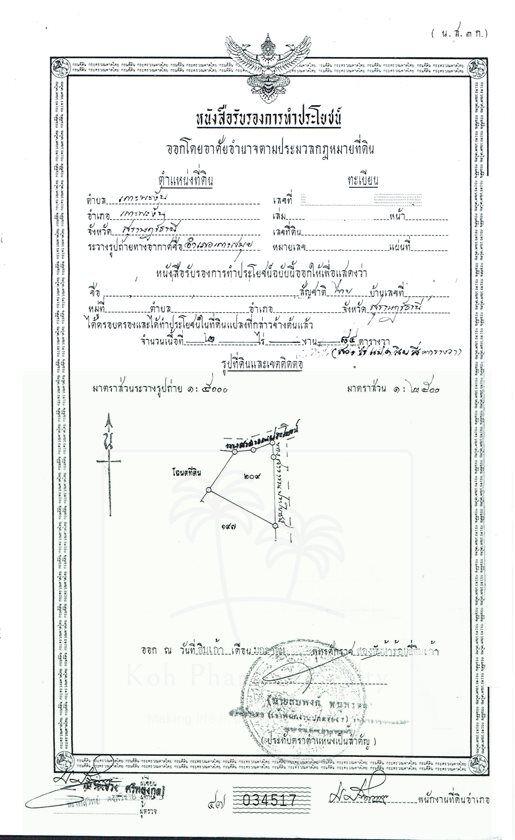
The Nor Sor 3 Gor (NS3K) title is a strong, legally recognized land certificate—just slightly below Chanote.
Key Features:
  • Officially surveyed land

  • Boundaries are recorded and verifiable

  • Recognized by the Land Office

Legal Rights:
  • Can be sold and transferred

  • Can be leased and mortgaged

  • Can be upgraded to Chanote

For Foreigners:
NS3K is generally considered acceptable, especially if:
  • You plan to upgrade it to Chanote

  • You conduct proper due diligence

Minor boundary discrepancies can occur, so a professional land survey is recommended before any transaction.

Nor Sor 3 (NS3): Moderate Risk Land Title

The Nor Sor 3 (NS3) title represents land that has been claimed and recognized, but not precisely surveyed.
Key Features:
  • Boundaries often use rough maps

  • No fixed boundary markers in many cases

  • Land measurements may be inaccurate

Legal Rights:
  • Can be transferred and leased

  • Upgrade to NS3K or Chanote is possible

For Foreigners:
This title carries higher risk, particularly:
  • Boundary disputes with neighbors

  • Delays in upgrading title

  • Potential legal complications

Only consider NS3 if there is a clear, realistic path to upgrading to Chanote.

Sor Kor 1 (SK1): Early Claim Document

The Sor Kor 1 is not a true ownership title—it’s a historical notification of land possession.
Key Features:
  • Indicates someone occupied the land

  • No formal survey or ownership registration

  • Cannot be freely transferred

For Foreigners:
Not suitable under any circumstance

SPK 4-01: Agricultural Reform Land

This title is issued under Thailand’s agricultural reform program.
Key Features:
  • Allocated to Thai farmers for agricultural use

  • Cannot be sold on the open market

  • Strict usage restrictions

For Foreigners:
Completely prohibited.
Using nominees or indirect structures here is illegal and highly risky.

Possession Rights (Por Bor Tor 5 and Others)

These documents are often mistaken for title deeds—but they are not.
Key Features:
  • Evidence of land use or tax payment only

  • No ownership rights

  • No official survey or registration

For Foreigners:
Extremely high risk—avoid entirely
These lands can be reclaimed or disputed easily.

What Foreigners Can Legally Do

Even though land ownership is restricted, foreigners still have several legal pathways:
1. Leasehold (Most Common)
  • Lease land for up to 30 years

  • Renewable – not guaranteed

  • Can register the lease at the Land Office

2. Condominium Ownership
  • Foreigners can own condos freehold

  • Max 49% of total unit space

3. Usufruct (Right of Use)
  • Grants lifetime right to use land

  • Cannot sell, but can live on and benefit from it

4. Superficies
  • Own buildings on land you don’t own

  • Useful for villa construction

Key Risks Foreigners Must Understand

  • Nominee ownership risks being voided

  • Low-grade titles risk losing your investment

  • May not hold up legally

Always ensure:
  • Title deed verification at the LDO

  • Contracts are registered publicly

  • Legal advice

Final Takeaway

If you’re a foreigner dealing with property in Thailand:
  • Best option: Chanote

  • Acceptable option: Nor Sor 3 Gor

  • Avoid unless upgrading: Nor Sor 3

  • Avoid completely: Everything below

The title deed is not just paperwork—it is the foundation of your legal security in Thailand.